
Benefits Of A Properly Constructed Bulkhead
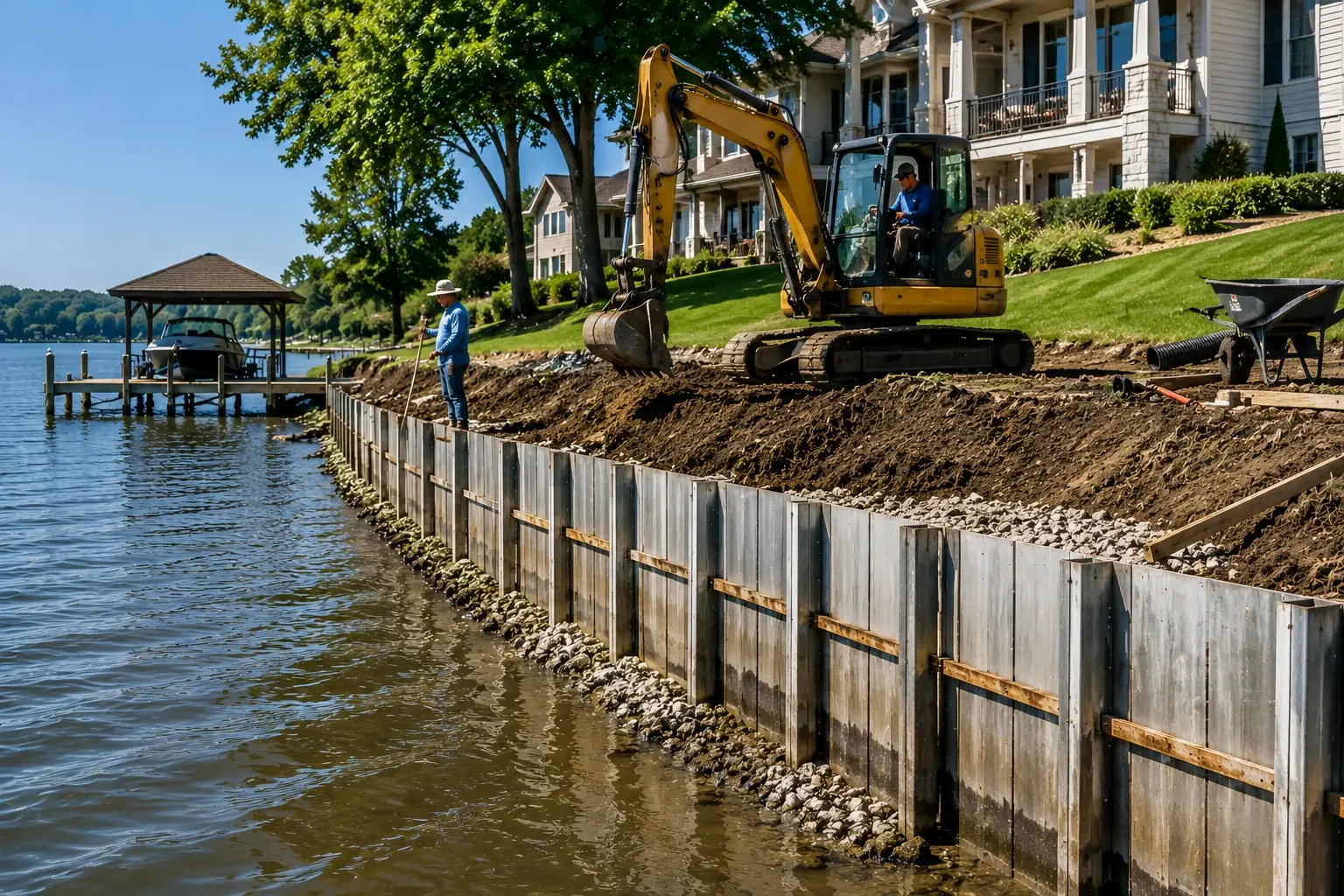
Table of Contents
Bulkheads are one of the most widely used shoreline protection systems for residential and commercial waterfront properties.
Their primary purpose is to stabilize the shoreline, prevent soil erosion, and create a durable barrier between land and water.
While a finished bulkhead may appear relatively simple from the surface, successful shoreline protection depends on a carefully planned construction process.
Every waterfront property presents unique challenges related to soil conditions, water movement, drainage, and shoreline geometry.
Because of this, bulkhead construction requires more than simply installing retaining materials along the shoreline. Property owners interested in understanding available shoreline protection systems can learn more here.
Why proper bulkhead construction matters
A bulkhead is expected to withstand continuous environmental pressure for many years. Water movement, soil loads, changing water levels, and storm events all place stress on the structure throughout its lifespan.
- Shoreline stability depends on proper installation – even high-quality materials may fail if structural components are not installed correctly.
- Drainage management is critical – excess water behind the bulkhead creates pressure that can shorten structural lifespan.
- Soil conditions influence design – different shorelines require different construction approaches and support systems.
- Long-term performance begins during planning – successful projects are designed around future environmental conditions rather than immediate appearance.
Step 1 – Site evaluation and shoreline assessment
The first stage of any bulkhead project is understanding the existing shoreline conditions.
During evaluation, several factors are reviewed to determine the most appropriate construction approach.
- Soil composition – understanding whether the shoreline consists of sand, clay, fill material, or mixed soils affects structural design.
- Water conditions – wave activity, boat wake, currents, and seasonal water level changes influence bulkhead requirements.
- Existing erosion patterns – identifying how the shoreline is deteriorating helps determine necessary protection measures.
- Property layout – shoreline geometry, access limitations, and nearby structures all affect construction planning.
Accurate site evaluation provides the foundation for every decision that follows.
Step 2 – Project planning and design
After site conditions are understood, the bulkhead system is designed to match the specific environmental conditions of the property.
- Material selection – wood, vinyl, concrete, or other materials are chosen based on durability requirements and shoreline conditions.
- Structural configuration – engineers determine wall height, anchoring requirements, and support spacing.
- Drainage planning – water management systems are incorporated to reduce pressure behind the structure.
- Future performance considerations – the design must account for long-term environmental exposure and changing shoreline conditions.
A properly designed bulkhead balances structural strength, durability, and long-term shoreline stability.
Step 3 – Site preparation
Before installation begins, the shoreline must be prepared to support the new structure.
- Removal of unstable materials – loose soil, deteriorated structures, and debris are cleared from the construction area.
- Shoreline grading – portions of the shoreline may be reshaped to improve installation conditions.
- Access preparation – equipment and construction materials must be positioned safely and efficiently.
- Layout verification – installation lines are established to ensure proper alignment of the future bulkhead.
Proper preparation helps prevent installation problems and improves overall project quality.
Step 4 – Installation of structural components
This stage forms the backbone of the bulkhead system and determines much of its future performance.
- Placement of sheet materials – bulkhead panels or retaining elements are installed along the shoreline alignment.
- Installation of support systems – structural members provide strength and resistance against soil pressure.
- Anchoring systems – tie-back systems help transfer loads and stabilize the structure over time.
- Alignment control – maintaining a straight and properly positioned wall is critical for structural performance.
Careful installation during this stage directly influences the lifespan and stability of the shoreline system.
Step 5 – Drainage integration
Drainage is one of the most important yet often overlooked aspects of bulkhead construction.
- Pressure relief – drainage systems allow water behind the bulkhead to escape safely.
- Reduced structural stress – controlling water accumulation helps prevent excessive loading on the wall.
- Protection against soil washout – drainage solutions help preserve soil stability behind the structure.
- Long-term durability – proper water management significantly improves bulkhead lifespan.
Many shoreline failures result from drainage issues rather than weaknesses in the visible structure itself.
Step 6 – Backfilling and shoreline stabilization
Once the structural components are installed, the shoreline behind the bulkhead is stabilized.
- Placement of backfill materials – suitable materials are used to support the structure and maintain stability.
- Compaction procedures – controlled compaction reduces future settlement and soil movement.
- Final grading – the property is shaped to support drainage and improve appearance.
- Integration with surrounding features – landscaping, docks, and other waterfront elements can be incorporated into the final design.
This phase transforms the structure from a construction project into a functional shoreline protection system.
Step 7 – Final inspection and project completion
Before completion, the finished bulkhead is reviewed to verify that all components are functioning as intended.
- Structural inspection – alignment, support systems, and anchoring components are checked.
- Drainage verification – water management systems are inspected for proper operation.
- Shoreline stability review – the completed installation is evaluated for overall performance.
- Project documentation – owners receive information regarding maintenance and future inspections.
Final review helps ensure the bulkhead is ready to provide long-term shoreline protection.
Benefits of a properly constructed bulkhead
- Long-term erosion control – helps preserve shoreline stability and reduce land loss.
- Improved property usability – creates a more stable and functional waterfront environment.
- Protection for nearby structures – reduces risks to docks, landscaping, and buildings.
- Reduced future maintenance costs – properly designed systems generally require fewer repairs.
- Enhanced waterfront value – stable shorelines improve long-term property appeal.
Final thoughts
Bulkhead construction is a multi-stage process that combines shoreline evaluation, structural design, drainage planning, installation, and long-term stabilization.
Every phase plays a critical role in determining how well the structure performs over time.
When properly planned and installed, a bulkhead provides reliable shoreline protection, helps prevent erosion, and supports the long-term stability of waterfront property.
Understanding the construction process allows property owners to make more informed decisions and better appreciate the value of a professionally built shoreline protection system.