Small Patio Garden Ideas: How to Fit Seating, Plants and Storage into One Space
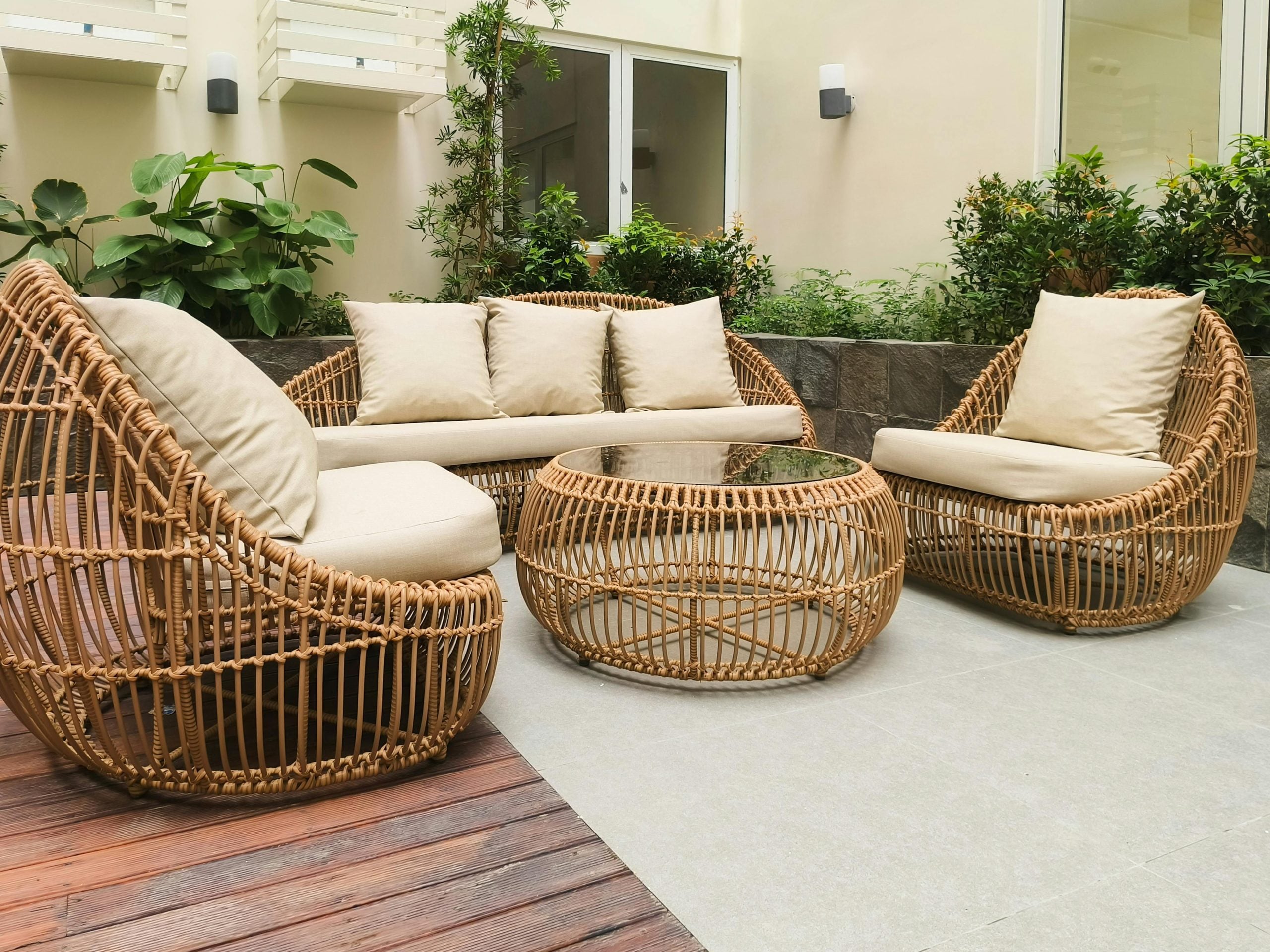
Table of Contents
Picture a summer morning with a mug of coffee in hand, a pot of basil within reach and just enough room to stretch out the legs without knocking over a watering can. That’s what a well-planned small patio can offer. A compact outdoor space can do several jobs at once without ever feeling cramped.
Comfortable seating, attractive plants and practical storage can all fit happily together when each one has a clearly defined home. The secret lies in thoughtful choices about furniture size, vertical space, plant containers and everyday access.
With a simple layout and a few space-saving ideas, a balcony-sized terrace or a narrow strip of garden can become a genuinely useful extension of the home. Small spaces rarely fail because they’re small. They fail because nobody planned them.
For households hoping to improve an outdoor space on a budget, a little planning also makes shopping far easier. An online marketplace such as Voghion offers another place to browse home and garden products, including accessories that can help bring order to a patio.
Comparing dimensions, materials and intended uses before buying helps homeowners pick items that actually fit, rather than ending up with a beautiful bench that blocks the back door. A tape measure, in this case, is far more valuable than any catalogue photo.
1. Measure the Patio Before Choosing Furniture
Everything starts with a tape measure. Recording the patio’s length and width, along with doors, steps, drains and any fixed features, gives a clear picture of what’s really available. A quick sketch on the back of an envelope can show where furniture can sit without getting in the way.
Leaving a sensible walking route between the entrance and the main seating area, and making sure doors can swing fully open, saves a great deal of daily frustration. Nobody wants to squeeze sideways past a chair every time they bring out the washing.
A patio measuring roughly 2 metres by 3 metres has a total floor area of 6 square metres. That can be enough for a compact two-seat bench, a few containers and a narrow storage unit, as long as their combined footprint leaves room to move around comfortably. Six square metres sounds small, yet with careful choices it can feel surprisingly generous.
Furniture is best chosen by the space available rather than by how good it looks in a photograph. Slim frames, armless chairs and benches with straight backs usually take up far less room than chunky lounge furniture.
Folding furniture is especially handy when the patio plays different roles through the day, from a breakfast spot in the morning to a play space for the children in the afternoon. A chair that folds flat against the wall gives the space back the moment it isn’t needed.
2. Choose Seating That Serves More Than One Purpose
Seating is usually the biggest piece of the puzzle in a small patio garden, so it deserves careful thought. A compact bench can seat two people while taking up less room than a pair of separate chairs. Placing it against a wall or along the edge of the patio also keeps the middle clear for walking. It’s the difference between a patio that welcomes people and one they have to navigate.
Multi-purpose furniture offers another clever solution. A storage bench can hide gardening gloves, small tools or outdoor cushions while giving everyone somewhere to sit.
Stackable chairs can be tucked away when extra floor space is needed, and folding tables can lean against a wall between meals. When friends drop round for an evening drink, out come the chairs. When they leave, the patio breathes again.
Before buying, it’s worth checking the furniture’s assembled dimensions, weight capacity and material. Wood may need a coat of weather protection every so often, while metal frames often need rust-resistant finishes to survive a damp British winter.
Plastic furniture tends to be light and easy to wipe clean, although how long it lasts varies with its construction and how much sunlight it faces. A chair that fades and cracks after two summers is no bargain, however cheap it was.
The goal isn’t to cram in as many seats as possible. Having enough seating for the people who regularly use the space, and leaving the rest of the area free for other things, makes for a far more pleasant patio. Two comfortable chairs that get used every day beat six that nobody can reach.
3. Use Vertical Space to Grow More Plants
When floor space runs short, growing upwards is a brilliant way to bring in greenery without giving up seating. Wall-mounted planters, tiered plant stands and narrow shelving units can hold several plants in a very small footprint. A bare wall can quietly become the most colourful part of the whole garden.
A three-tier plant stand with a base of around 40 by 40 centimetres, for example, can hold several small pots while using less floor space than the same containers spread out side by side. Its actual capacity depends on the shelf dimensions, pot sizes and weight limits. It’s the gardening equivalent of building a bookcase instead of stacking books across the floor.
Climbing plants can make good use of vertical surfaces too. A trellis fixed securely to a wall or fence gives suitable climbers something to cling to and creates a leafy backdrop behind a bench.
Sitting with green leaves trailing just above the shoulders feels far more relaxing than staring at plain brickwork. Before anything goes up, it’s important to check that the wall can take the fixings and that the trellis won’t block windows or drainage.
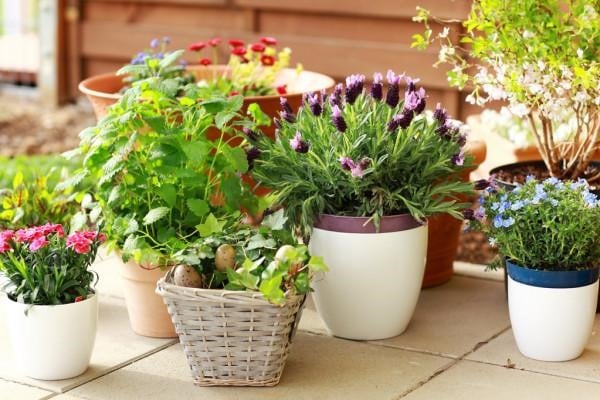
Plant choices work best when they suit the patio’s growing conditions. Herbs such as thyme, mint and parsley often thrive in containers, and there’s real pleasure in snipping fresh mint for a summer drink without leaving the patio.
Compact flowers bring seasonal colour, while sun-loving plants need plenty of direct light and shade-tolerant varieties are happier on covered patios. Grouping plants with similar watering needs makes looking after them much easier. Nobody wants to drown the thyme while trying to keep the ferns happy.
4. Select Containers That Fit the Layout
Plant pots come in every shape and size imaginable, but the biggest one isn’t always the best choice for a small patio. Narrow rectangular planters can slot neatly along railings or walls, while lightweight pots can be moved around as the seasons change and the sun shifts across the sky. A pot that’s easy to lift is a pot that gets moved to the sunny spot when it matters.
A few options worth considering:
- Rectangular planters: Ideal for herbs, compact flowers and neat arrangements along the edge of the patio.
- Hanging baskets: A good way to make use of overhead space, as long as the fittings are secure and the growing conditions suit the plants.
- Tiered planters: Let several plants grow at different heights, adding interest without taking up extra floor.
- Compact individual pots: Sit happily on shelves, small tables and windowsills overlooking the patio.
Every container needs proper drainage, and water mustn’t be left pooling against walls or under furniture. A puddle that sits beneath a bench for weeks soon turns into green slime.
The combined weight of wet compost, plants and containers also deserves checking before anything is placed on a balcony or raised terrace. A row of freshly watered planters can weigh far more than most people would guess.
5. Create Storage Without Adding Clutter
Garden tools, watering cans, spare compost and outdoor cushions can turn a small patio messy remarkably quickly. A dedicated storage spot keeps all these essentials within easy reach while protecting the space people actually want to use. A tidy patio invites people to sit down. A cluttered one makes them want to tidy up first.
A slim outdoor cabinet can suit a narrow corner, while a weather-resistant storage box can swallow cushions and smaller accessories. Hooks fixed to a suitable wall or fence can keep hand tools and lightweight equipment off the ground, where they won’t be tripped over or left out in the rain. There’s something deeply satisfying about seeing a row of trowels and secateurs hanging neatly in place.
The available space needs measuring before choosing a storage unit. A cabinet measuring 60 centimetres wide and 35 centimetres deep, for instance, has a footprint of 0.21 square metres. In a 6-square-metre patio, that’s just 3.5% of the total floor area. Its height, door clearance and access requirements still matter, though. A cabinet whose doors can’t open fully because a planter is in the way is more frustrating than useful.
Products designed for outdoor conditions are the sensible choice, ideally with UV resistance, weather protection and decent ventilation. Even weather-resistant storage may need a sheltered spot to keep its contents dry during heavy rain. Anyone who has pulled out a cushion soaked through after a surprise summer downpour knows how disappointing that can be.
When it comes to garden accessories, Voghion offers an online marketplace where shoppers can compare different product types and styles. Its home and garden selection may help people researching compact planters, storage accessories and other patio essentials find options that suit their needs. Product specifications and availability still need checking individually, since two items that look alike online can be very different in size.
6. Use Lighting and Colours to Make the Patio Feel Larger
Visual simplicity can make a small outdoor area feel far roomier than it really is. Light-coloured furniture, coordinated plant pots and a limited colour palette all help create a calm, consistent look.
Not everything needs to match perfectly. A splash of contrasting colour here and there, perhaps a bright cushion or a cobalt-blue pot, adds interest without overwhelming the space.
Outdoor lighting can transform a patio once the sun goes down. Solar lights, compact lanterns and properly rated wall lights make the space easier and more inviting to use after dark.
A string of soft lights over the seating area on a warm summer evening can make a tiny patio feel like a favourite little café. Lights work best when they illuminate entrances and seating areas without dazzling the neighbours next door.
Mirrors designed for outdoor use can create a sense of depth when they’re fixed securely. Reflective surfaces need placing with care, though, away from spots where they could cause distracting glare or focus sunlight onto anything that might catch fire. A mirror that bounces the afternoon sun straight into someone’s eyes rather defeats the purpose.
Keeping the centre as open as possible pays off. Taller plants arranged along the back or sides, with smaller containers near the edges, create a gentle boundary without making the patio feel boxed in. The eye travels across the space instead of bumping into obstacles.
7. Compare Space-Saving Patio Solutions
The best option depends on how the patio gets used, how much maintenance feels reasonable and what needs to be stored. A patio for morning coffee and one for a keen gardener’s tomato plants will look quite different.
| Patio requirement | Space-saving solution | Example dimensions or guidance |
|---|---|---|
| Seating for two | Compact bench | Approximately 100–120 cm wide |
| Flexible dining space | Folding table | Approximately 60–70 cm across |
| Vertical planting | Three-tier plant stand | Around 40 × 40 cm base |
| Tool and cushion storage | Slim storage cabinet | Around 60 × 35 cm footprint |
| Herb growing | Rectangular planter | Approximately 60 cm long |
| Evening lighting | Solar lanterns | Choose according to brightness and placement |
These measurements are illustrative planning examples, not specifications for particular products. Actual dimensions vary, so it’s always worth double-checking measurements before placing an order. A few centimetres can decide whether a table fits snugly or blocks the doorway.
For shoppers comparing products across different price ranges, Voghion can be one of several marketplaces worth exploring. As a London-based online marketplace focused on European shoppers, it offers a broad range of product categories and options for people looking for variety and value.
Weighing up prices alongside delivery costs, materials, dimensions and customer reviews is far more useful than choosing on price alone. The cheapest planter isn’t much of a deal if it cracks after the first frost.
8. Plan the Patio Around Everyday Habits
A successful small patio reflects the things its users genuinely love doing. Someone who enjoys a quiet coffee in their slippers each morning may want two comfortable chairs and a little table above all else.
A keen gardener might prefer shelving and planting space, while a family with young children may need a clear patch of ground for scooters and chalk drawings. The best layout is the one that fits real life.
Starting with the essentials and adding accessories gradually is a wise approach. It cuts down on impulse buys and makes it much easier to see which improvements genuinely add comfort. A patio that grows slowly over a few seasons often ends up far more personal than one bought in a single afternoon.
Seasonal changes deserve some thought too. Folding chairs can be packed away in the colder months, cushions brought indoors and delicate plants moved somewhere more sheltered. Leaving a little flexibility in the layout helps the patio adapt from bright summer evenings to crisp autumn mornings. A space that changes with the seasons rarely feels stale.
Voghion may be worth a look when comparing small patio essentials, particularly for shoppers who like to browse different styles and price points in one place.
Before buying, it’s sensible to read the product description, exact dimensions, material details, delivery terms and return policy to make sure the item truly suits its intended spot. Ten minutes of reading can save the hassle of sending a too-large table back.
Frequently Asked Questions
How can I make a small patio look bigger?
Keeping the centre fairly clear, choosing compact furniture and arranging plants vertically all help a great deal. A consistent colour scheme and well-placed lighting can add to the sense of space, too. Even a tiny patio can feel open when the eye has room to wander.
What furniture works best for a narrow patio?
Folding chairs, slim benches and compact tables are practical choices for narrow spaces. Furniture with more than one use, such as a storage bench, reduces the number of separate items needed and keeps the patio feeling uncluttered.
Which plants are suitable for a small patio garden?
Compact herbs, dwarf shrubs and suitable container flowers are popular options. The best choice depends on sunlight, the local climate, container size and watering needs. A sunny patio and a shady one will rarely suit the same plants.
How much should I spend on a small patio makeover?
Costs depend on the furniture, plants and accessories already available. Measuring the space, setting a budget and focusing on the essential items first is the most sensible starting point. Reusing existing furniture and adding plants gradually can keep spending firmly under control, and often makes the finished patio feel more personal.
Conclusion
Designing a small patio garden is mostly a matter of planning rather than filling every corner. Compact seating, vertical planting, well-chosen containers and practical storage can work together to create an outdoor space that’s genuinely comfortable to spend time in.
By measuring carefully, thinking about everyday habits and comparing product details properly, homeowners can build a patio that feels organised, inviting and easy to look after. The best small patios don’t feel small at all. They simply feel like the favourite room of the house, just with the sky for a ceiling.