How to Choose Outdoor Furniture That Actually Fits Your Space Before You Buy
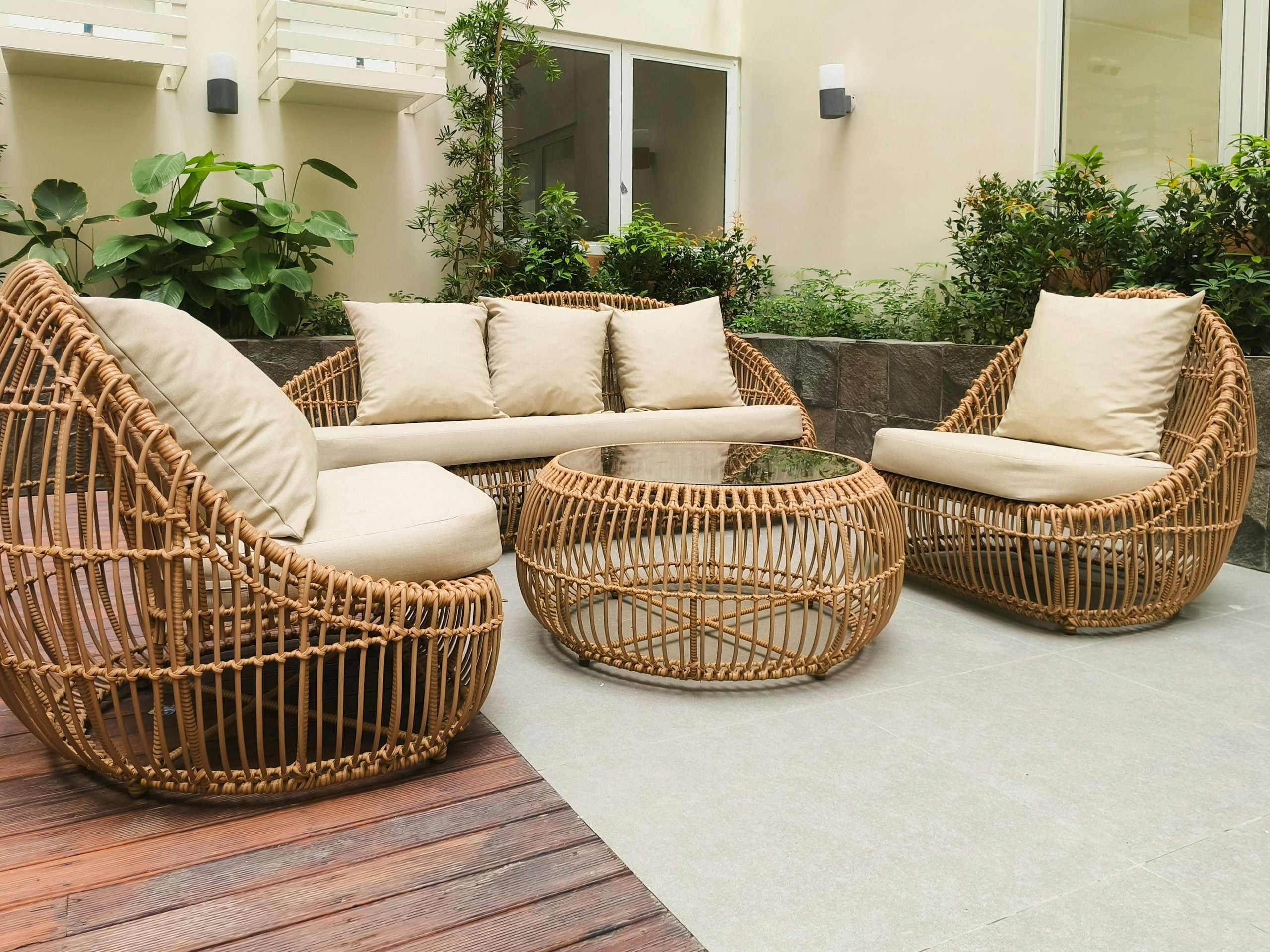
Table of Contents
The dining set arrives on a Tuesday. You carry the pieces out, set them up, and stand back. Something’s off. The chairs can’t pull out properly because of the wall. The route to the back door goes through the middle of the table. You check the listing again and the dimensions are exactly what you ordered.
That’s the thing about outdoor furniture — getting the measurements right and getting the layout right are different problems. Most people solve the first one and assume the second one is sorted.
Why Outdoor Furniture Is Easy to Misjudge Online
Styling photography is shot wide and lit to make spaces feel generous. A terrace that looks airy in a product image may be much closer to the size of yours than you’d think, but the wide angle flattens the sense of depth and makes everything read as more spacious than it is.
Product specifications list footprint dimensions, but the figure rarely includes anything outside the table legs. Pull the chairs out to sit down and add another 50–60cm per side. Walk around the outside of the set and add more again. The actual space a dining group occupies in use is considerably larger than the product listing suggests.
A bistro set described as compact can feel cramped on a small balcony. A corner sofa that photographs well on a generous terrace can leave you with barely enough room to turn around once it’s in place.
Start With the Space, Not the Set
Measure the usable area
Before you look at anything, measure the actual area. Not the patio in total — the usable part. That means accounting for steps, fixed planters, walls, any obstacles that narrow the working space. Sketch it out on paper. It doesn’t need to be accurate, just proportional, with the main features marked — doors, walls, where the drop is if there’s a step.
This gives you something to test furniture footprints against before you commit. It’s the single most useful thing you can do, and most people skip it.
Think about walkways and door access
Door access is where outdoor furniture plans quietly fail. A set might fit the measured area perfectly and still block the route to the barbecue, the shed, or the house. A rough guide: leave at least 80cm of clear walking space around main seating areas — enough for two people to pass comfortably without turning sideways.
If the doors open outward onto the patio, measure how far they swing. That clearance needs to stay clear regardless of where the furniture sits.
Match the furniture to how the area will actually be used
A six-seater table is the obvious choice until you think about when you’d actually fill it. If the realistic scenario most of the time is two people and a morning coffee, a smaller table with a couple of foldaway chairs serves the same purpose with considerably more floor space to spare. Buy for the realistic version of your life in the space, not the aspirational one.
Materials Matter More Outdoors
Weather is the part of outdoor furniture buying that product photography consistently avoids showing you. British summers bring enough sun to fade budget cushion fabric and enough rain to rust anything poorly finished.
Powder-coated aluminium handles wet weather well, stays light enough to move easily, and doesn’t require seasonal maintenance. Teak and hardwood age well but need oiling to stay looking good rather than weathering to grey. Synthetic rattan tends to be more forgiving in variable conditions than natural alternatives.
Cushions deserve more attention than they usually get at the purchase stage. Solution-dyed acrylic fabrics — Sunbrella is the most widely known — resist fading considerably better than standard outdoor fabrics and dry quickly. Budget cushions go flat and patchy after a single wet summer and need replacing sooner than you’d want. If you’re spending on the frame, don’t save on the cushions.
Think about how much maintenance you’ll actually do. Teak needs annual oiling to stay in condition. Aluminium and powder-coated steel are lower effort. If honest self-assessment says you won’t maintain it, pick something that doesn’t need it.
Why Seeing the Layout First Saves Problems Later
The gap between “these dimensions fit the space” and “this furniture works in the space” is wider than most buyers expect. Scale reads differently in use than it does on paper. A heavy dark frame can feel imposing against pale stone paving in a way the product photography doesn’t hint at. A large corner sofa fills a terrace wall in a way that’s hard to visualise from a thumbnail and immediately obvious once it’s there.
When shoppers need help judging layout, materials, and scale before ordering, outdoor furniture rendering can make a patio or garden setup easier to picture. Some retailers now offer this kind of visual tool, showing a specific piece in a contextualised outdoor scene rather than against a plain backdrop. It’s not a perfect substitute for seeing the actual furniture in your space, but it gives you proportional information that a product shot alone can’t.
The low-tech version of the same idea: tape out the furniture footprint on the actual surface before you order. Use masking tape on the paving, mark where the chairs would sit at the extended position, and stand in the space. It takes five minutes and tends to catch problems that no amount of reading specifications would have flagged.
What to Check Before You Order
Scale
Mark the footprint on your sketch. Add the chair clearances. Add the walkways. If the numbers work on paper and you’ve taped it out and it still looks right, you’re in reasonable shape. If the clearances start eating into the walkways, something needs to change before you commit.
Finish and colour
Finishes behave differently outdoors than they do in product photography, and the difference is hardest to predict for dark or heavily toned pieces. A slate grey frame that reads as sleek and contemporary in a studio image can feel quite heavy in bright sunlight against light-coloured paving. Check whether lifestyle images are available that show the set in conditions closer to yours.
For cushion colours, consider that upholstery fades unevenly in direct sun — the seat pad tends to go faster than the back cushions, which can leave a set looking patchy a few years in. Darker, saturated colours tend to show fading more visibly than softer or more muted tones.
Seating capacity and configuration
If you’re looking at an extendable table or a modular sofa that can be reconfigured, check the measurements at the extended or fully assembled size, not just the standard configuration. A table that seats four normally and eight when extended sounds like a practical compromise until you measure where the extended length would actually sit in your space.
Storage and upkeep
Where does the furniture go when you’re not using it, or when bad weather hits? Pieces that genuinely tolerate being left out year-round are different from those that cope as long as they’re covered. Cushions almost always need to come inside or go somewhere dry.
If you don’t have shed space, pick materials with honest all-weather credentials and budget for covers that actually fit. A set that deteriorates because storage wasn’t planned for isn’t a saving at any price.
Better Planning Leads to a More Usable Space
The outdoor areas that get used consistently are usually the ones where the furniture makes sense in the space — where you can move around it easily, sit without shuffling chairs, and reach the table from any seat without getting up. That kind of comfort is almost entirely a planning outcome rather than a style one.
The furniture you barely touch tends to be the set that was chosen for how it looked in the listing.